
Selecting the perfect wood for your custom wood hidden door is about much more than color or texture. It’s about crafting a feature that harmonizes with your home, performs flawlessly over time and expresses your personal style. Every species has its own character, from the way it handles moisture and temperature shifts to how it accepts stain or paint. Whether you’re planning a solid wood panel hidden door or a custom wood bookshelf door, the type of wood you choose determines its aesthetic appeal, longevity and functionality.
Common locations for hidden doors include master bedrooms, home offices and basements, where privacy and security are crucial. Once you’ve chosen the area, you can focus on selecting the right wood. When designing a custom wood hidden door, the wood species choice affects almost every aspect of the finished product. Aesthetics come first for most homeowners, but what’s beneath the surface is just as important.
The density, grain and hardness of the wood influence how it reacts to seasonal humidity changes and how well it maintains its shape over time. Hardwoods such as oak, walnut and mahogany tend to resist warping and swelling, which means they retain tight seams and smooth movement even in variable climates.
In addition to structure and stability, your selection also determines cost and maintenance. Exotic hardwoods command higher prices because of their durability and distinct appearance, while domestic species like maple, cherry or alder offer excellent quality at a more affordable price. A walnut hidden door might suit a sleek, modern setting with its rich brown tones and smooth grain, while an oak hidden door is more suitable for a traditional or craftsman-style home, thanks to its rustic charm.
Material choice even influences finish quality. Certain species take stains more evenly, revealing deep, attractive patterns, while others work better with paint for a seamless and smooth wood hidden door design. Matching the type to your home’s existing trim, flooring or cabinetry ensures your new door doesn’t just fit, but feels like it’s always been part of the space.
Some woods stand out as timeless favorites for custom wood hidden doors because they balance durability, beauty and versatility.
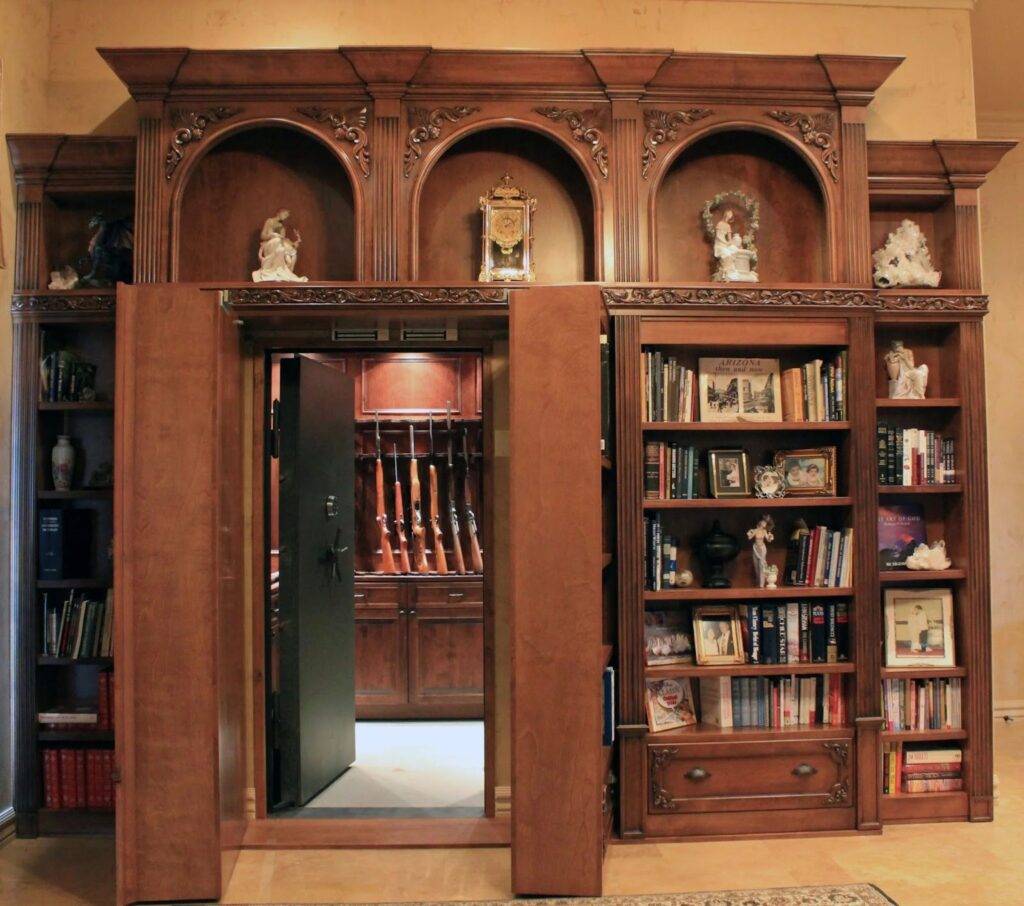
Oak is one of the most widely used species, known for its incredible strength and distinctive grain pattern. It’s available in red and white varieties, offering flexibility in tone and texture. An oak hidden door brings a sense of tradition and reliability, and because it accepts stain so well, it can range from pale honey hues to rich espresso finishes.
Walnut delivers modern elegance. It’s dark and smooth, and its natural depth enhances minimalist or high-end interiors. Its density and natural luster make it a top choice for a custom hidden security door, where visual sophistication meets strong performance.
Maple provides a clean, fine-grained surface that’s ideal for contemporary spaces. Its pale color makes it versatile for either light stains or paint, blending seamlessly into surrounding walls for a subtle, painted hidden door effect. Many homeowners choose maple hidden doors when they want understated sophistication and durability without the price tag of more exotic hardwoods.
Cherry is prized for its natural warmth and reddish undertones that deepen beautifully over time. It’s perfect for creating a door that ages gracefully and develops a patina unique to your home’s environment.
Mahogany is the gold standard for luxury custom hidden doors. Dense, stable and resistant to decay, it performs exceptionally well in humid and dry conditions. The deep reddish-brown tones of a mahogany hidden door exude refinement, making it a favorite for upscale homes and formal spaces.
Alder is a slightly softer, more affordable species that can pass for a lot of other wood species. It is also easy to carve and shape, making it an excellent choice for intricate wood hidden door designs or custom wood bookshelf doors where detail and precision matter.
Choosing the right wood species for your custom hidden door starts with understanding how each factor shapes appearance and performance. Every decision, from the type of wood to its finish, influences how the door looks, how well it functions and how it integrates with your home.
The budget is often the starting point. Hardwoods like white oak, walnut and mahogany are premium options that offer durability and timeless beauty. They’re more of an investment but hold up for decades. Softwoods, such as alder or poplar, are more affordable and easier to shape, making them ideal for interior custom wood hidden doors that will be painted or lightly used.
Finish preferences also guide your choice. Opt for oak, cherry or walnut if you love visible grain, as these species take stain beautifully, enhancing their natural texture. You can paint maple or poplar for a modern wall-matching effect, perfect for custom hidden security doors. These doors have become a popular design choice as they make a space look larger, while concealing the entryway.
Location matters, too. Interior doors can use softer woods, while exterior moisture-prone areas need dense, weather-resistant options like mahogany or white oak. For bunkers or safe rooms, the best hidden doors are those designed to conceal their presence entirely while remaining structurally intact even under force. You’ll also want to coordinate tones with existing cabinetry, flooring or trim. A walnut hidden door suits dark interiors, while an oak hidden door pairs nicely with rustic or traditional homes.
Lighting and room color can affect how your wood looks. Darker woods like walnut and mahogany add contrast in bright rooms, while lighter options, such as maple or birch, help smaller or dimmer spaces feel airy. Cooler wall colors balance out dark woods, while warmer tones bring out rich stains.
Hardwoods are best for frequently used or load-bearing doors because they resist dents and warping. Softwoods are ideal for ornately carved, decorative or low-traffic wood hidden door designs where appearance takes precedence over strength.
The finish is what brings your custom wood hidden door to life. A stain highlights the natural grain, adding character and depth. For example, a stained wood hidden door in walnut is luxurious, while a light oak stain is warm and classic.
Finishes should suit your home’s style. Modern interiors look best with smooth, matte finishes, while traditional spaces benefit from richer tones with a hint of gloss. Paint is a favorite for solid wood hidden doors, creating an integrated look that conceals the doorway completely.
Professional finishing makes a world of difference. Expert application ensures consistent color, smooth texture and protection from humidity, fading and daily wear. This attention to detail guarantees your door’s beauty and durability for years to come.
There are eco-friendly alternatives if sustainability is important to you. Engineered wood cores combine a veneer of real wood with a stable inner structure, reducing waste while maintaining strength and beauty. This approach offers the look and feel of solid hardwood without the environmental footprint.
Homeowners can also explore reclaimed or responsibly sourced hardwoods, or even specialty materials like bamboo. These options provide striking aesthetics and durability while supporting sustainable practices.
Choosing the best wood for hidden doors means balancing style, durability and practicality. The right material enhances your home’s design, ensures lasting performance and turns your door into a true statement piece. Let Creative Home Engineering help you find the perfect match, from selecting the ideal wood species for custom doors to crafting flawless hidden doors that unite beauty and precision.