
Top 5 Locations for a Hidden Door in Your Home
Location is the first thing you must consider when installing a hidden door in your home. It determines which door ideas are feasible. Review your floor plan and explore the top hidden door locations to see where you can carve out a secret room by converting an underutilized space or subdividing a larger area.
Where is the best place to put a door in a room? Creative Home Engineering recommends these five hidden door locations.
The master bedroom satisfies many criteria for a secret door location. It’s a low-traffic area, allowing you to get inside your hideaway without others noticing. You also want your hiding spot near where you sleep or spend time for easy accessibility, especially if you want a panic room or a firearms cache.
This sanctum is generally bigger than secondary bedrooms, so it has more space to spare. It gives you more options to enclose a windowless area to serve as a concealed refuge without an alternative entry method.
The downside to master bedrooms is that burglars gravitate toward them. Intruders expect homeowners to store valuables in these private spaces, so criminals typically target them. Nevertheless, you can offset this risk by placing your access control method in a convenient spot. The faster you activate your motorized door, the sooner you can hide discreetly to safely ride out an intrusion.
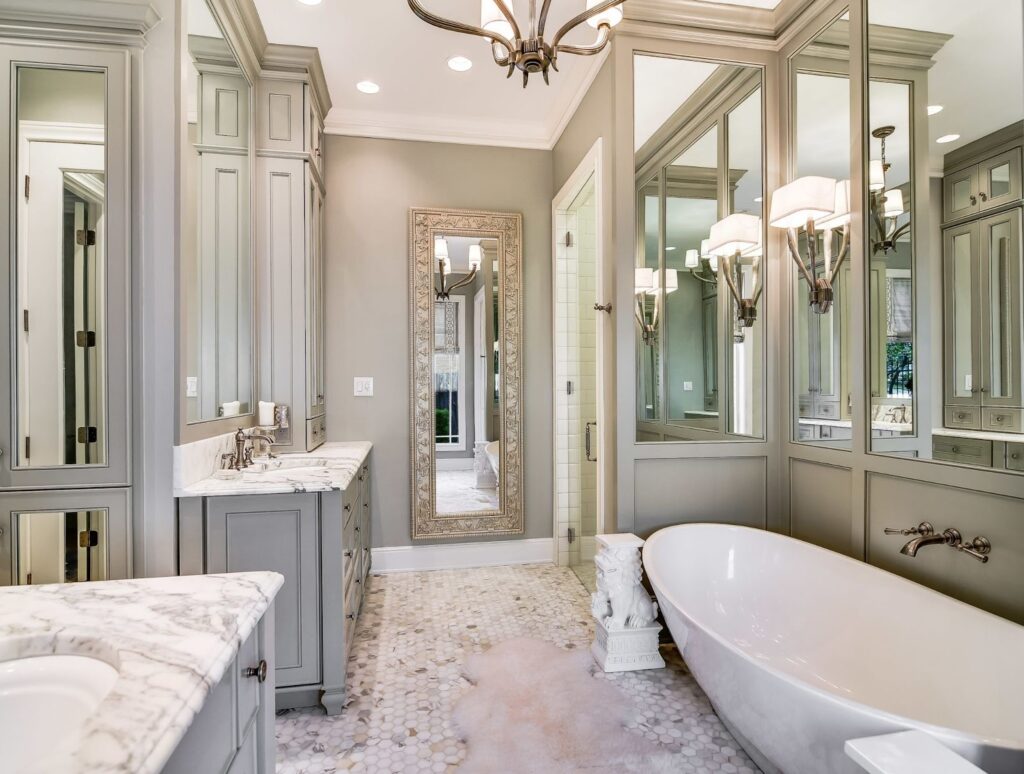
The bathroom is an ingenious secret door location. Intruders typically check the freezer and vases before considering going into this space to look for hidden valuables.
This room may limit your door disguises to mostly linen cupboards, armoires, and full-length mirrors, but Creative Home Engineering models erase any gaps between the hidden door and its surrounding structures to avoid drawing attention.
If your floor plan doesn’t have any storage rooms adjacent to bathrooms then your strongest candidate might be an en suite bathroom.
A full or three-quarter bathroom connected to the master bedroom is an elegant hidden door location. It allows you to have a safe room within your bedroom while placing its entrance somewhere intruders are less likely to scrutinize.
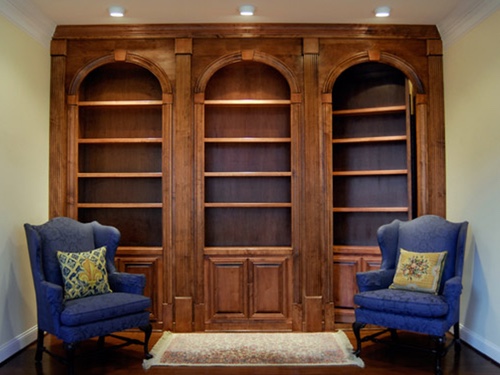
Home libraries make for cool hidden door locations for many reasons.
These rooms can easily house sliding and swinging bookcase doors without arousing suspicion. These units are highly customizable, structurally and aesthetically. They can be bulletproof, water-resistant, fire-resistant, and immune to chemical and biological threats. Creative Home Engineering veneers bookcase models with specific wood species and applies certain finishes so they can convincingly blend into other furniture.
Libraries inspire boundless key customization ideas. You can use books, decorations and other items to operate your secret doors. You can also copy what you see in Mission Impossible or James Bond films and use fingerprint scanning to leverage biometric technology’s anticounterfeiting capability for security.
You can even turn a library into a home office, ensuring you’re near your haven often. Home offices are more popular than ever, as about 36 million U.S. employees work remotely. Burglars may expect homeowners to work from home occasionally, so they shouldn’t find these spaces strange, meaning a quality hidden door in an office can go unnoticed.
A floodproof basement is a good hidden door location because you can access it from various rooms. You can install a covert trap door in the living room or a moving shelf in the laundry room to enter it.
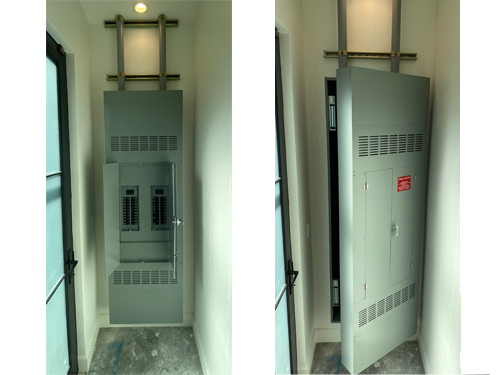
Using half of your basement space as a game room allows you to use an arcade game to conceal your secret room. A false electric panel entry is one of the most mind-blowing hidden door ideas, especially in an unassuming basement used for storage.
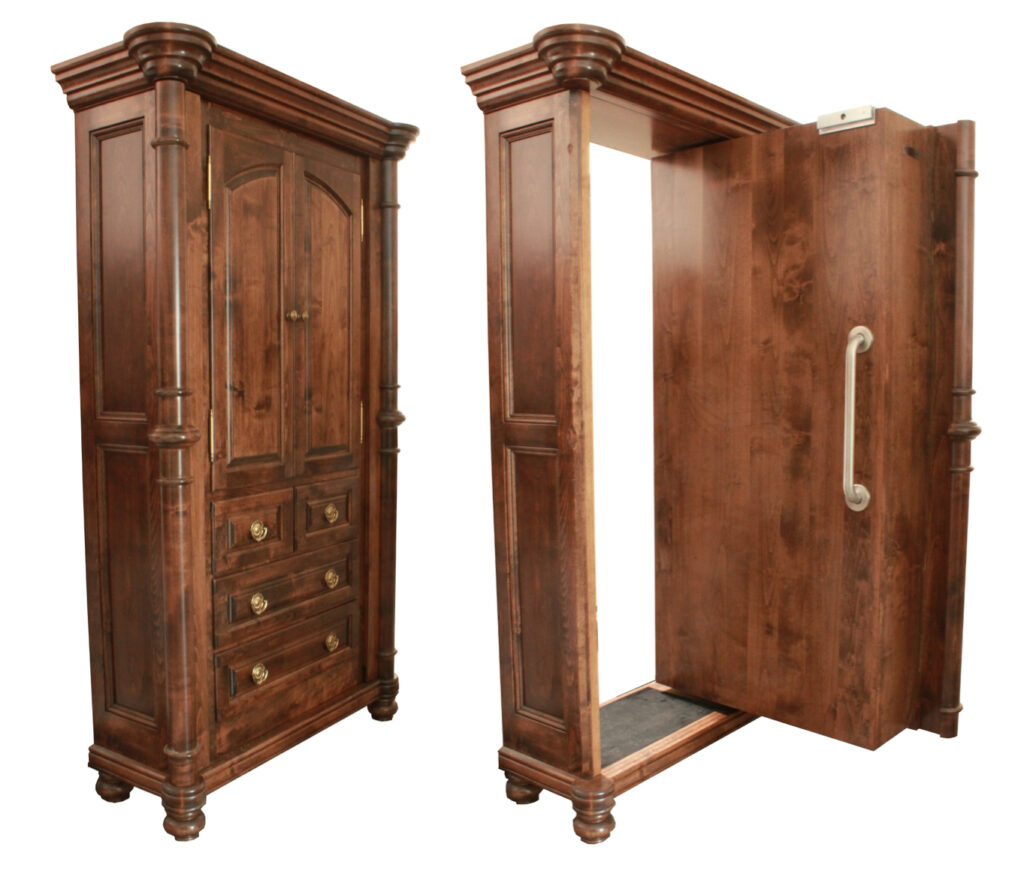
The popularity of The Lion, The Witch and the Wardrobe has made wardrobe hidden doors one of the most iconic options Creative Home Engineering has available. Imagine opening your wardrobe, stepping inside and finding yourself in a secret location, as if you’ve just stepped into Narnia.
Do you have a closet not seeing much use? You can turn it into a secret room by covering its entrance, while still having a space to store your hanging clothes. Creative Home Engineering can build a custom wardrobe to fit into the opening for camouflage. Obscuring an existing doorway can also simplify hidden door installation.
While these are some of the most popular locations, the possibilities are nearly limitless. A staircase can be another ingenious secret door location. Although most people know there’s space under a flight of stairs, many may not scrutinize it if they can’t find an obvious entrance.
Concealing the passageway to an underground secret room around this area can be tricky. Your safest bet is to lift the staircase. This project requires a flat wall to interface a motorized door and may involve close collaboration with a construction crew to ensure the unit works perfectly with the landing.
A secret trap door can be a less expensive and less complicated alternative. A concealed hinged door masquerading as a landing is easier and safer to operate, and can be designed so that it leaves no visible seams on the surface.
Seek expert advice to determine the most suitable location for your secret room and concealed door. To start your project, contact Creative Home Engineering today to explore your options.