
What would you hide? Knowing what you wish to conceal gives you direction when exploring secret room ideas and choosing the door to obscure the entrance to your space. However, many homeowners make the mistake of selecting a door solely on aesthetics. Creative Home Engineering customers almost always ended up choosing a completely different design from what they initially wanted due to unforeseen spatial constraints, security concerns and safety hazards.
If you’re picturing a specific design for a secret room, these 24 hidden door ideas may change your mind.
The hidden bookcase door is the quintessential disguise to obscure a covert passage to another room. It can function as real shelving, which is part of its camouflage. This door system can swing or slide, whether it has one or two panels.
The thickness of a swinging hidden bookcase door may cause it to open only to 90 degrees, although Creative Home Engineering’s patented hinges stretch the opening angle to nearly 180 degrees. The sliding kind takes up considerable wall space and requires more effort to operate, even when its fully concealed tracks are equipped with precision linear ball bearings.
Motorization is an option to avoid caster wheels that damage floors, although it has safety implications for kids. This feature may pose a pinching hazard that can injure children’s fingers.
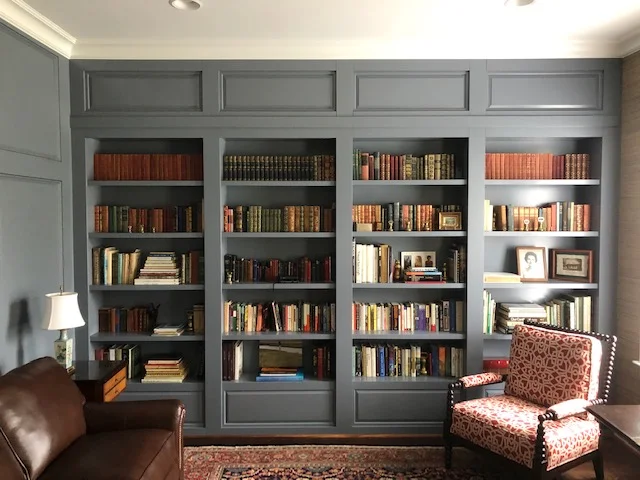
A book makes a cool switch. Releasing the door by pulling or tilting one of the titles on display draws inspiration from pop culture. It adds an interactive “movie secret passage” moment.
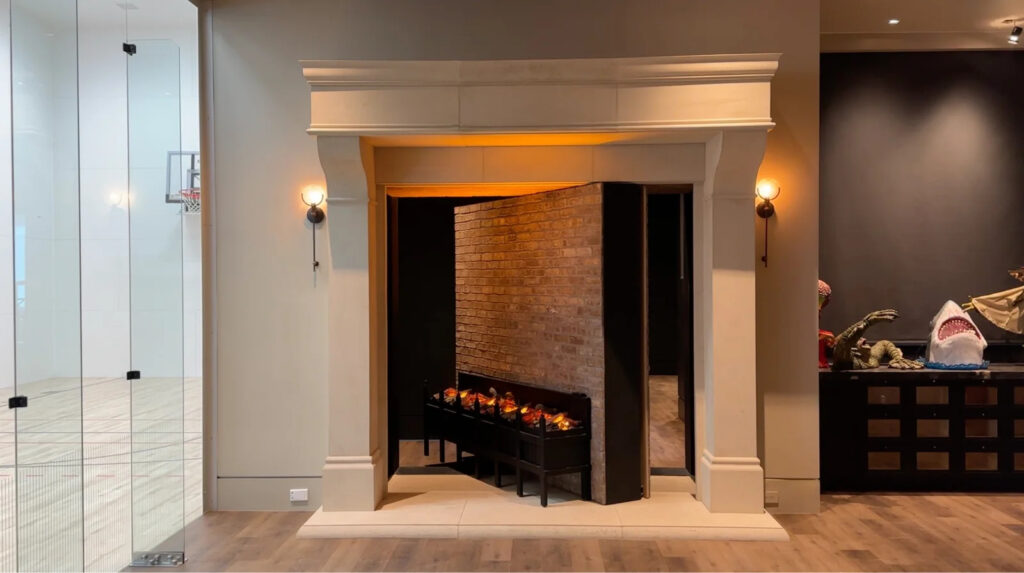
This secret door idea turns a brick fireplace and a mantel into part of the concealed entrance, which is perfect for libraries, studies and dramatic living rooms.
Creative Home Engineering can use an electric fireplace that actually heats the space or add realistic smoke and fire effects. Either way, a piece that slides, rotates or moves in multiple directions can drop jaws when it activates.
A door that doubles as a full-length mirror and a cover to a hidden passage fits bedrooms, dressing rooms, closets, home gyms and bathrooms naturally. A mirrored wardrobe can make the space larger and more inviting.
The mirror door is the most inconspicuous design since it sits flush to the wall with no external hardware.
Many homeowners love concealing their wine rooms behind cabinetry, shelving or architectural millwork. It’s a wonderful opportunity for a dramatic reveal, making the descent to the cellar an extraordinary experience.
Hidden bookcase, wall unit and stone doors are solid options for this concept.
A hidden door that masquerades as a mirror, bookcase, stone wall, cabinet or phone booth from the Roaring ‘20s aligns with the reemergence of art deco in interior design. Install it at the entrance of your private bar or tasting room to echo speakeasy vibes. These secret door ideas work well with studies, libraries and basements.
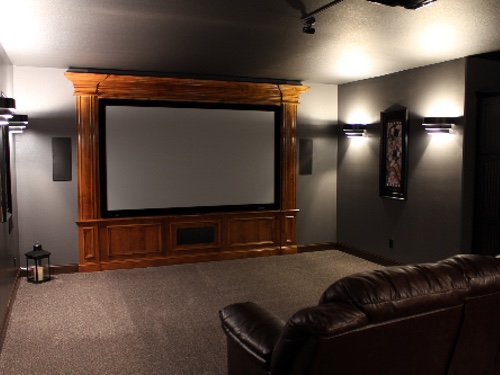
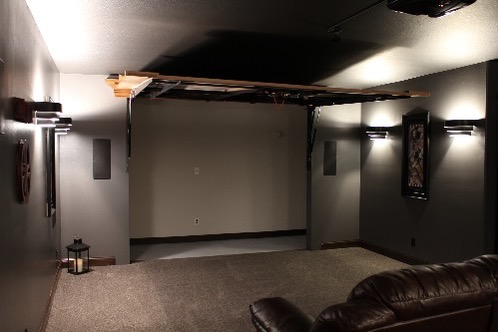
A secret entrance to a home theater is a fantastic surprise for guests. Doors disguised as hanging mirrors, British phone booths with antique rotary telephones, entertainment centers, cabinets and stone wall panels are your safest bets.
Complementing concealment with noise abatement by using a floor system and walls with Sound Transmission Class ratings above 60 decibels makes this secret room idea even better.
What’s more, you can have a theater screen functioning as a gas spring door that reveals another secret compartment.
A bookcase, pool cue rack or wall unit that opens into your private billiard hall, poker table, arcade bar or video game den is part of the entertainment.
These designs offer a fun opportunity to incorporate unusual hidden door opening mechanisms, such as arcade machine buttons, a cue stick, a statue or a book.
Walking through a portal that appears to be a wardrobe is more imaginative for a themed children’s room concept enhanced by mystical light fixtures and starry ceiling projections than simply hiding a conventional doorway.
The armoire is the best hidden door design for the job. This furniture’s bulky construction and ornate details make the entrance more intriguing.
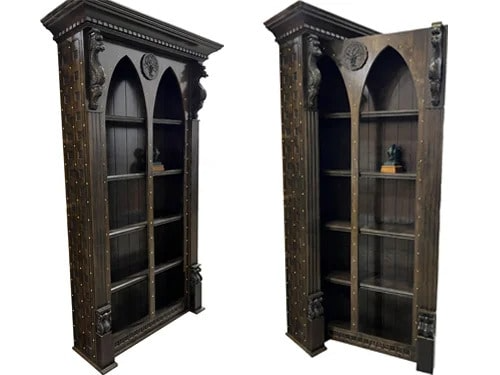
Bookcases and media units are fitting hidden room door ideas for private libraries and reading nooks. The secret space can be small, but it should be cozy to make it more convincing.
A bookcase matching the adjacent wall units is a natural cover for a doorway leading to a concealed home office. However, a jib door is a brilliant alternative to make the ingress point hide in plain sight.
Few things are more mind-blowing than witnessing the reveal of a hidden staircase chamber. The sight of this “built-in” feature in motion would wow any observer.
This secret room concept is a neat way to maximize the space under a staircase, converting it into a storage area, reading nook or a safe room with emergency supplies.
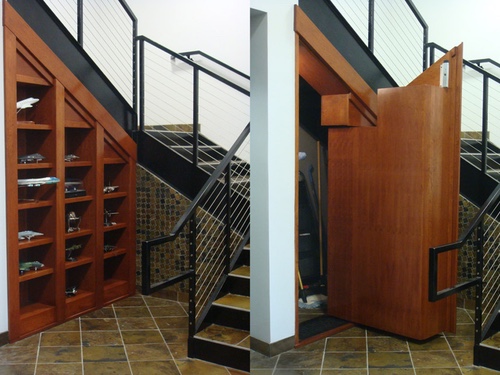
Cabinets and wall panels are practical hidden walk-in pantry door ideas. These pieces can mesh with existing kitchen cabinetry and walls, ensuring the space’s aesthetics remain cohesive and uninterrupted.
Take your concealed pantry idea a step further by also hiding a scullery and a butler’s pantry. The same hidden pantry door ideas also work for these busy areas, helping keep your primary kitchen neat and organized by separating the meal preparation zone from the gathering space.
The most appropriate invisible door ideas for gun and safe storage rooms combine camouflage with security.
Concealment isn’t a substitute for forced entry resistance, so place a premium on steel reinforcements and advanced hidden door locking mechanisms. Creative Home Engineering has extensive experience in conceptualizing and fabricating a range of tactical doors.
Security is as important as discretion when integrating a secret entrance to an ordinary room. Go beyond the door’s disguise and consider the structural integrity of the entire space. Constructing your safe room with reinforced wall panels and a ballistic-rated steel door inspires peace of mind.
Parents should know that there’s a trade-off between room security and child safety access. Many homeowners with kids worry that the sophisticated locks of high-security doors increase the risk of getting locked inside. Some think adding ingress methods can alleviate fears of entrapment, but alternative safe room entry points pose security vulnerabilities.
Hidden bookcase, cabinet and wall panel doors make basement staircases disappear. Keeping the doorway out of view can dramatically change the appearance of your hallway or living room.
Jib doors require precise alignment to hide the seams even under sharp lighting, making the illusion convincing.
When measured, fabricated and installed according to their instructional guides, they fit the existing architecture. The moldings and panels seamlessly continue directly across them.
A swinging wall panel is a minimalist counterpart to the traditional hidden bookcase door. This design has flush surfaces and no visible casing or conventional handle. Depending on the wall paneling style, the thin gaps around it can be imperceptible.
Vertical wood slat cladding features consistent and repetitive lines that conveniently hide a jib door’s seams.
This hidden door design’s strong contemporary look makes it a staple of modern houses, so much so that it can pass for an interior accent when seen in just one area. Timber and bamboo slats are trendy because of their lighter carbon footprints, and casual observers would think you’re green-minded before suspecting you’re hiding something behind them.
Books, candlesticks, chess pieces and statues make awesome disguised door switches. Creative Home Engineering can program an object to open the unit only when moved in the correct sequence, preventing inadvertent activation.
Secret door opening mechanisms are part of the fun that motivates many to create multiple concealed rooms throughout the house.
Hidden electronic access methods are modern alternatives to the “pulling the door” concept. Incorporating a keypad or a biometric screening device is a good way to transition to common door tech while still feeling futuristic.
If you have a wide wall opening, a hidden door made of two bookcases that opens from the center makes for an impressive reveal.
Design the secret entrance around the architecture of your house.
Think of what people could believe the wall is, rather than wondering how to hide the door. This mindset shift makes it easier to blend a bookcase, an electric fireplace insert, a mirror, cabinetry, wall paneling, a wardrobe or a display case into the surroundings.
Some secret door ideas are more popular than others. Still, every project calls for a unique design to adapt to the house’s physical constraints and neutralize the potential hazards it poses to occupants. Explore Creative Home Engineering’s rich library of custom designs to discover how the team hid secret doors in previous projects and be inspired.