
A home speakeasy beats an ordinary bar for anyone who likes a drink, a little history and a place to host. The fun is in the disguise — a hidden entrance that turns a nightcap into an event. Here’s how to build one that feels like the real thing.
A custom hidden door conceals the entrance and sets the whole tone. A camouflaged passage feels exclusive, and watching it move for the first time gets a reaction every time.
For a project that really lands, the door and the room both have to deliver — a great door into a flat room is a letdown. Here are the disguises that work best.
Hidden bookcase doors blend well in many rooms, especially when decorated with hardcovers, photographs and miscellaneous accessories.
The shelves are also where the switch can hide. Because a speakeasy is all about the drink, Creative Home Engineering often builds the trigger right into a bottle — tilt a bottle of whiskey, push the cork on a bottle of wine, or pull the lever on a fake beer tap, and instead of pouring a drink, the door releases. Hiding electronics inside a clear bottle is surprisingly tricky, so the team builds switches that look identical to the real thing, in whatever brand the client likes. One recent restaurant project ran with the idea: an entire apothecary wall of old-fashioned bottles, with a single light-up bottle as the trigger that opens the speakeasy behind it.
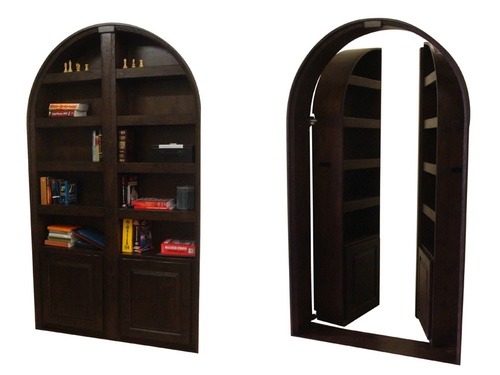
If your room is wide enough, you can install a sliding bookcase door. If you want to place it in a narrow corridor, consider a swinging unit.
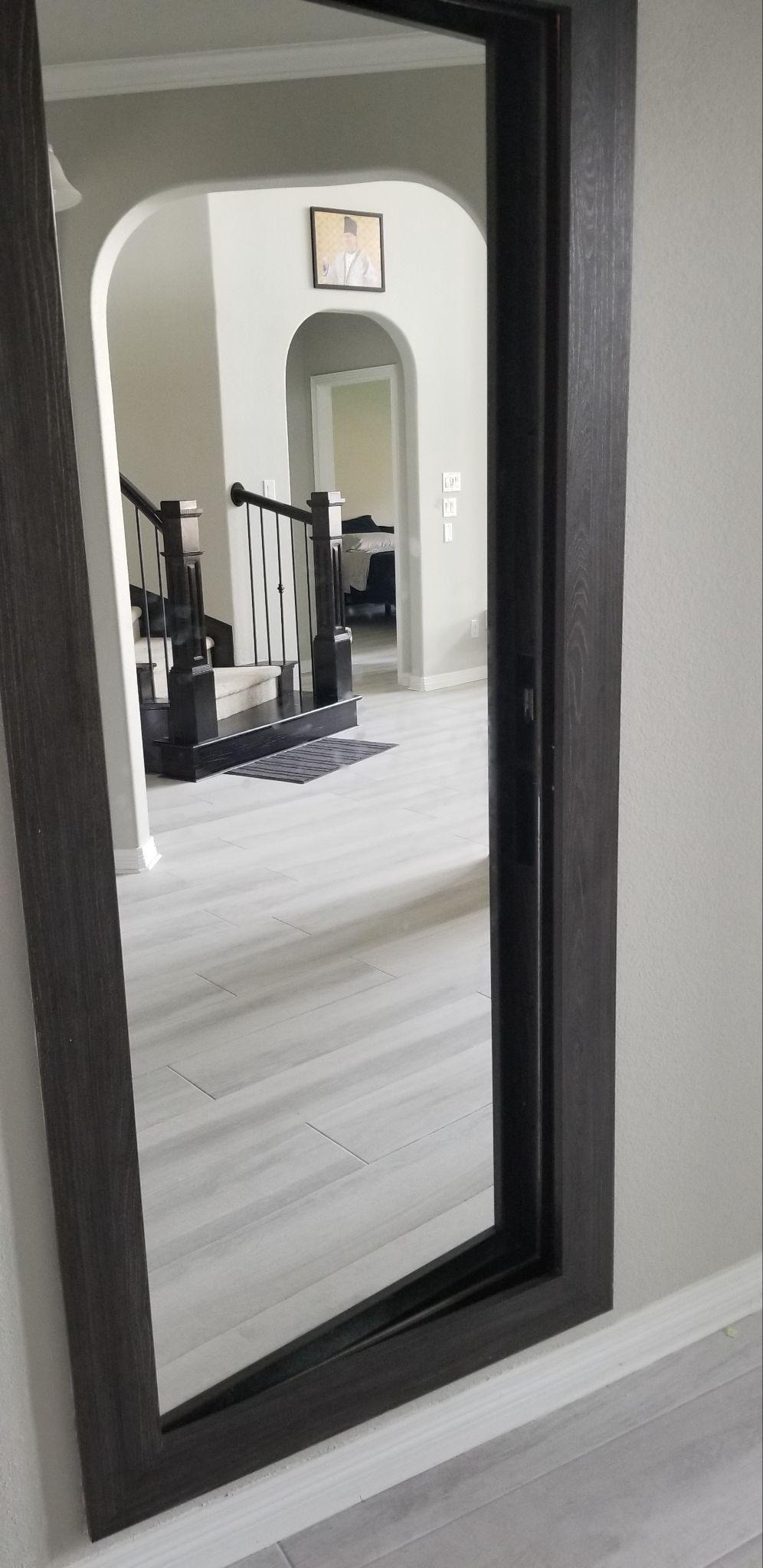
Mirrors are a convincing disguise for a hidden door when placed in the right location. They’re a staple of bedrooms and bathrooms and an acceptable feature in smaller rooms that need glass to appear larger.
A full-length mirror reads as wall-mounted and covers the whole opening, and the reflection keeps anyone from clocking it as a door.
A flush wall panel is the most invisible option of all, and it lives or dies on the details.
It has to match the surrounding paneling exactly — same material, color, seam pattern and millwork. With CNC-machined hinges and hardware doing the hidden work, the finished panel reads as just another section of wall.
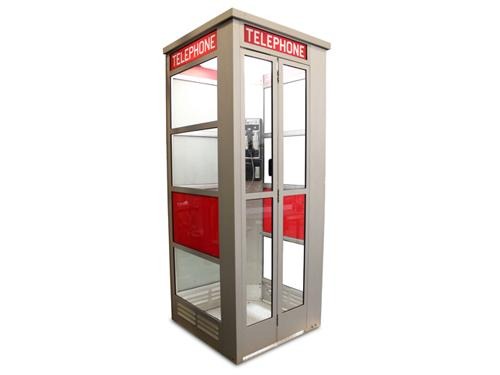
Instead of hiding in plain sight, this one leans into the theme. Creative Home Engineering has built phone-booth doors in an art deco style straight out of the Roaring ‘20s — the kind of distinctive look that signals “speakeasy” before anyone touches it.
It’s a natural fit for a password. On one vault-door speakeasy, the team set a small sliding window at eye level — slide it open, give the password and you’re in, exactly like the originals.
For a modern version, that password can run through a hidden keypad you reset before each gathering, so only the guests you’ve tipped off can get in. It’s the kind of showmanship that has landed Creative Home Engineering’s doors in The New York Times.
Certain colors can reinforce your home speakeasy’s sense of secrecy. Rich wood tones and deep hues, such as charcoal, navy and forest green, create a moody, chic, low-lit atmosphere.
The door itself doesn’t have to be dark. Pairing two undertones of the same color, or a brighter door against a subdued room, makes the space feel tucked away from the rest of the house.
Treat the wall as your canvas to inject more personality into your private bar. Bold wallpaper, textured wall panels, or patterned tile bring more character and depth to the space. Lean into a more dramatic look to indulge in refreshing concoctions in a place with unmistakable character.
Vintage glassware, decanters and retro bar tools sell the period better than anything modern.
The ceiling often fades into the background, but it can elevate the entire room. Consider wood beams, tin tiles or dark paint. Coffers are visually magnetic in ceilings above 8 feet high, adding a touch of sophistication to an otherwise nondescript surface.
Round it out with a short menu. Stock what you like, but a few classic cocktails are what make it feel like a speakeasy.
Draw inspiration from Prohibition mixology. According to cocktail recipe books from that time period, many of the era’s favorite drinks, such as Everything But, French 75 and Alexander’s Sister, have “Gordon water” as the primary ingredient, which refers to gin.
Authenticity has its limits — skip the bathtub gin and pour something properly distilled.
A hidden speakeasy is one of the most fun projects to own, and it’s exactly what Creative Home Engineering builds. To get started, contact the team to talk through your ideas.