
Installing a hidden door for a home theater is a fun idea. However, a private cinema room project presents unique challenges that require ingenious solutions. Creative Home Engineering explains how to make it work.
You don’t have to be a film buff to appreciate a dedicated home theater space. When designed thoughtfully, an intimate auditorium can eliminate distractions and recreate the immersive movie-theater experience.
This desirable amenity adds a touch of luxury to your residence. Homes for sale with rooms that let homeowners unwind and entertain sell 2.2% above expectations, as interest in spaces to retreat and unwind increases.
Choosing the right space is key to having an immersive home theater. The basement is often the best candidate. Its subterranean location makes it easier to block outside noise and light when creating a basement home theater.
The most fitting custom hidden door design for a home theater depends on the space adjacent to the entrance. Here are tried-and-true custom hidden door ideas:
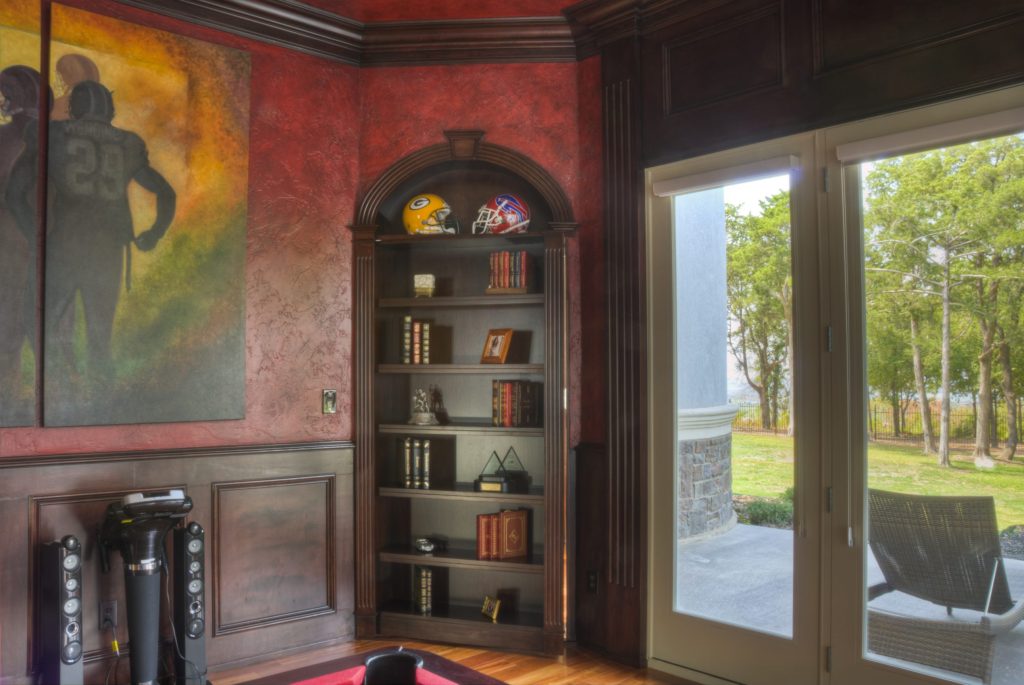
To help clients decide, Creative Home Engineering asks for photographs and sometimes a video walkthrough of the space, then recommends camouflage options that would look natural. The team can attest that the full-length mirror hidden door is popular in bathrooms and closets. You can have it without the mirror glass and customize this hidden door with artwork of your choice.
For custom home upgrades like a private cinema room, camouflage for custom hidden doors is critical. A hidden movie room door should seamlessly blend into the wall panel, shelving or acoustic treatment. An entrance that disappears when the lights are down creates a sense of seclusion, making your personal movie house truly an escape from everyday life.
Architecture should be high on the agenda. Use your custom door to reinforce your home theater’s minimalist, modern or classic design. The secret door to your home theater can masquerade as a 1920s-style ticket booth, where pulling the ticket itself acts as a switch, or a movie poster surrounded by several other non-door movie posters to add to the mystery. It could even be opened with a movie prop, like a dragon’s tooth.
A soundproof home theater door can dampen loud noises. The most important factor is the seal, without it, all the sound insulation in the world won’t do much. Creative Home Engineering typically uses a bulb seal to help form an airtight building envelope and adds acoustic insulation and mass to the door’s interior side. These strategies improve energy efficiency and help prevent sound from traveling in and out of your private cinema room. Solid-core construction can minimize noise leakage, while flush designs reduce sound reflection and echo.
However, a soundproof hidden door can’t create an acoustically insulated bubble on its own. Outdoor sounds can enter your immersive home theater through other openings, such as electrical outlets and perforations.
Airtight construction and adequate insulation shouldn’t be an afterthought when planning high-end home renovations or luxury basement upgrades. Visualizing your luxury home theater design with noise abatement in mind is essential. For example, the floor underlayment of the space above a basement home theater should have a sound transmission class rating of over 62 decibels to block sound from human vocals or televisions.
A hidden entry helps prevent light from the hallway or any adjacent space from spilling into your theater during viewing, preserving a low-illumination ambience and supporting a true theater experience.
Still, light leakage is less of an issue for private cinema rooms than for high-security hiding spots. In Creative Home Engineering’s experience, most clients aren’t too concerned about it.
Nevertheless, the company loves using a full perimeter bulb seal to block unwanted light. When it’s not feasible, the team installs a drop seal at the bottom and, sometimes, at the top of the door. Magnetic seals and, when needed, specialized light-blocking brushes can help make a movie room’s hidden door feel and appear solid when closed.
However, a basement home theater requires a means of egress, such as an operating window that’s more than 72 inches above the finished grade, which can let in outdoor light. Using a blackout curtain can keep your cinema dark enough during the day.
The beauty of hiring Creative Home Engineering to create a hidden door for your movie room is the boundless customization. This soundproof home theater door builder thinks about the big picture. It ensures that the unit conceals all custom hardware from view, complements the room’s layout, seating and screen size, and matches existing wall panels, finishes and fabrics. Expect the hidden door to flawlessly integrate into the acoustic panels and treatments.
The company has completed about 5,000 secret passageway systems for various projects, including home theaters, since 2004. The team can suggest basement movie room ideas you never thought were possible. You’ll get a 3D CAD model of your chosen design, showing how the door would look in your preferred space.
Creative Home Engineering won’t force you to commit to a concept you aren’t completely happy about. Only when you approve a design will the fabrication begin.
Creative Home Engineering designs every door to operate smoothly and quietly and to resist wear despite frequent use. The team promotes concealed door safety by ensuring easy access in low-light conditions. If you prefer a motorized hidden door, you can choose from manual override options to get out safely when the power goes out.
Every element of your movie room’s hidden door must be intentional to work without issues. Let Creative Home Engineering know that you specifically want a secret door for your home theater to ensure everyone’s on the same page. To get started with your project, contact the team now to share your ideas.