
Converting an existing door into a hidden door is easier than you might think, and it’s one of the most rewarding home upgrades you can take on. You already know hidden passageways are more than clever tricks. They blend architecture, design and engineering into seamless functionality. The challenge lies in achieving total concealment without compromising structure or everyday use. Modern solutions let you merge security and creativity in a single transformation.
You might want your walls to flow without visual breaks or your home office to stay private without drawing attention. Custom secret doors let you achieve that by preserving clean architectural lines and blending perfectly into minimalist interiors or luxury designs. They also enhance privacy, reduce noise, and hide functional areas like utility spaces or panic rooms without interrupting your home’s aesthetic rhythm.
Smart automation and advanced locking systems allow you to open your hidden security door using your phone or voice command. This elegant mix of artistry, discretion and modern innovation elevates how you experience your space daily.
Before customizing your existing door, you’ll want to assess the structural details that can make or break your unique doorway design. Start by checking wall depth, framing integrity, and how nearby walls or trim might affect installation. Evaluate your door’s swing, header clearance and how the opening fits your floor plan. These small adjustments ensure smooth motion and a perfect reveal.
To achieve true concealment, match your materials carefully. Align wood grains, paneling and moldings so your door disappears into the wall. Framers often deal with around 15% waste from damaged or unusable lumber, but switching to manufactured wood products can nearly eliminate that issue.
When making your custom hidden door, you’ll quickly find that your chosen design defines its function and character. A bookcase disguise is among the most timeless options. It brings storage and intrigue together while keeping your entry completely secret. For narrow hallways or small rooms, mirror or flush panel fronts help maintain visual continuity.
If you want an ultra-sleek look, flush wall panels with pivot or magnetic latch systems deliver seamless concealment with zero visible hardware. The type of mechanism matters if you want high-security doors for homes. To perfect the illusion, use advanced alignment techniques so every seam disappears even under sharp lighting.
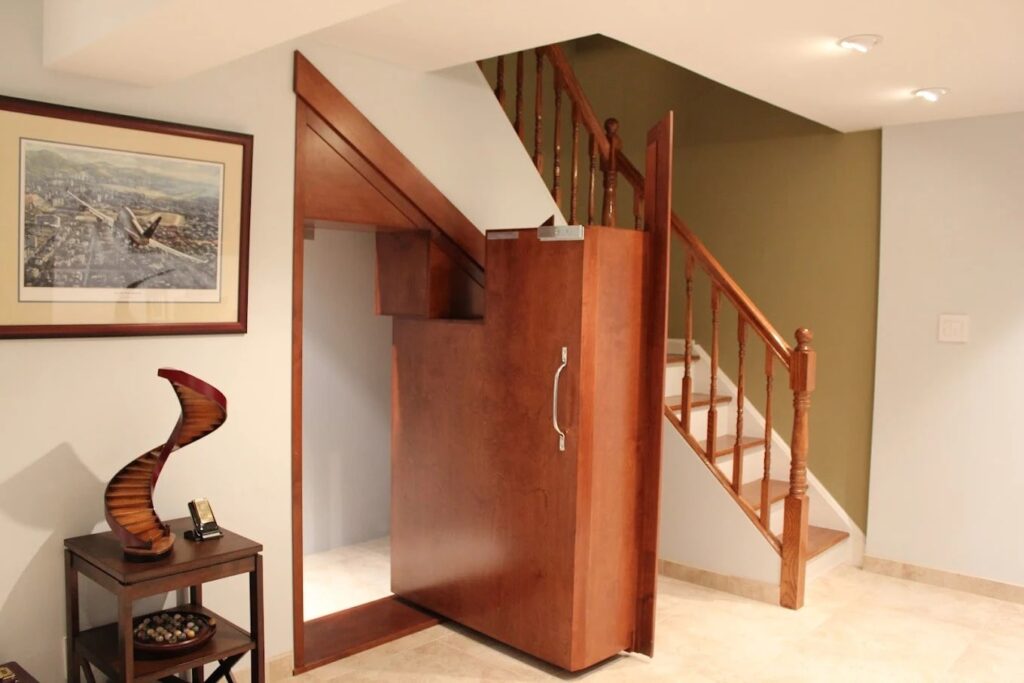
Swinging doors are easy to integrate but require space for clearance, and sliding doors save space but need precise wall tracks. Meanwhile, flush wall systems are the gold standard for seamless concealment, though they demand the most accuracy in installation. Mechanically, you can go manual for simplicity, motorized for effortless automation or use electromagnetic locks for advanced security.
Always consider whether your secret door locks should unlock in a power loss or be fail-secure, staying locked in this event. To maintain the custom security doors’ illusion, hide hardware like flush bolts, specialty hinges, concealed pivots and magnets. Mismatched finishes or awkward placement immediately ruin the illusion and draw unwanted attention.
Before fabrication begins, secret room builders rely on precise digital modeling to guarantee a perfect fit and flawless motion. They create detailed computer-aided design drawings or 3D scans of your existing space, capturing every wall contour, angle and surrounding feature. When using photogrammetry, each image must be clear and high-resolution, with at least 50% to 60% overlap to generate an accurate reality recreation.
Companies such as Creative Home Engineering assemble and stress-test each interior security door in their facility before shipment, fine-tuning balance and motion smoothness. Once approved, the system ships in modular sections for easy transport and is seamlessly integrated on-site, which ensures your hidden door performs as perfectly as it looks.
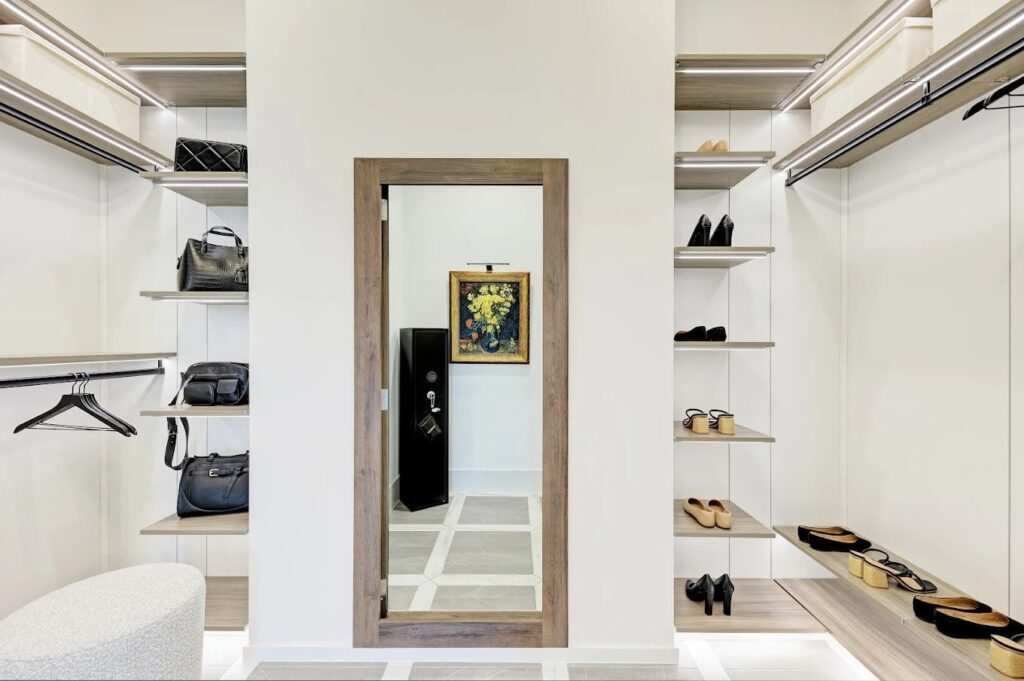
Start by adjusting the framing to square up your opening, adding backing materials or reinforcement where necessary to handle weight and movement. When mounting concealed hinges or pivots, align them with millimeter accuracy so your reveal lines stay tight and invisible from every angle. Route any wiring discreetly through headers or within wall cavities to hide power access for locks or sensors.
Once installed, test and calibrate fortified doors. Check soft-close functions and fail-safe exits to ensure smooth and safe operation. Perfect the illusion with thoughtful finishing touches like blending trims and matching paints or stains so your hidden door disappears seamlessly into the surrounding architecture.
Since 2004, Creative Home Engineering has set the standard for architectural concealment, turning ordinary walls into extraordinary hidden passages. Its design-to-installation process begins with an in-depth consultation to understand your space and functional goals. From there, the team develops detailed concept designs and engineering plans for hinge load and electronic integration.
Every component is built to exact tolerances during fabrication and tested for smooth motion and mechanical reliability. Modern automation options like biometric locks and voice-activated systems bring convenience and prove that security and style coexist seamlessly.
Partnering with hidden door manufacturers ensures your project works flawlessly and complements your architecture for years. If you’re ready to explore refined, fully engineered solutions, learn more about custom hidden door designs with Creative Home Engineering — the pioneers who turn architectural imagination into precision-built reality.